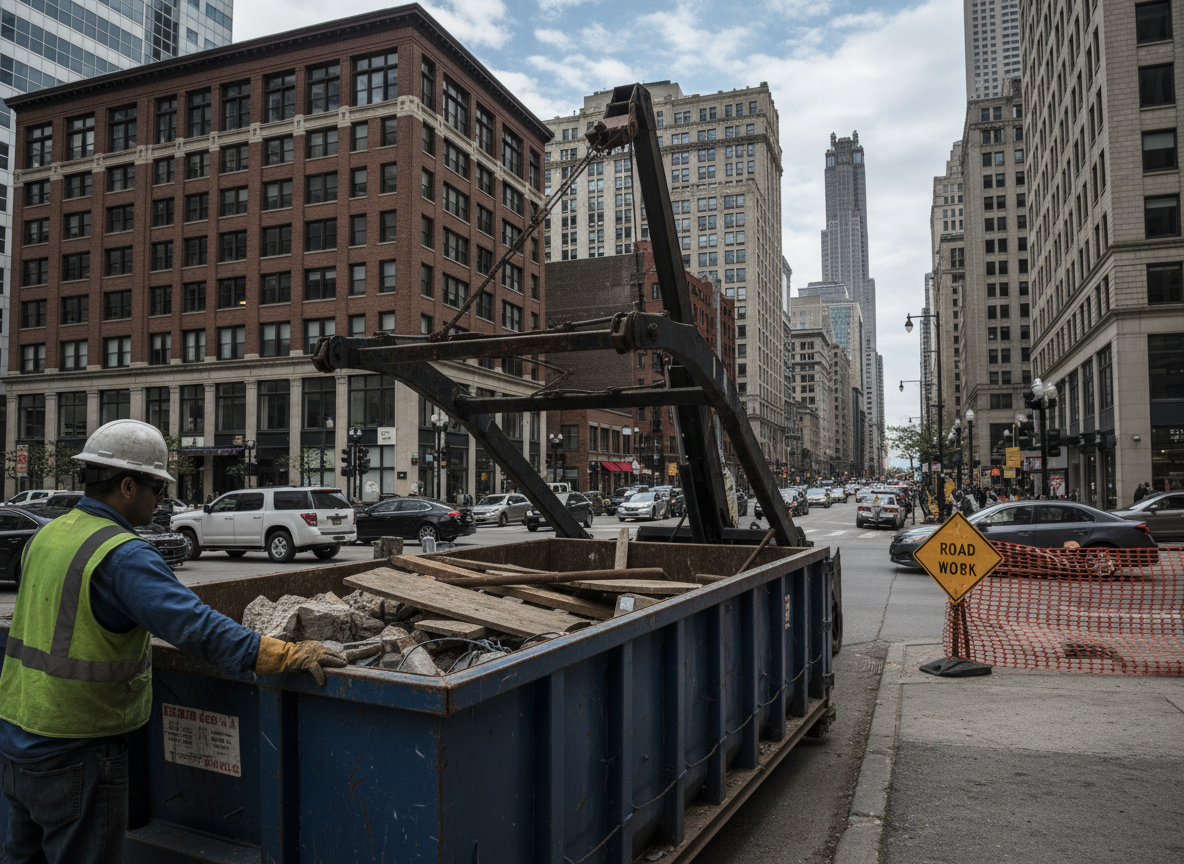
Chicago construction sites in older neighborhoods like Lincoln Park and Bridgeport often involve brick, plaster and narrow alley access that limits standard truck placement. A construction dumpster must sit on a stable surface while meeting city rules for street use permits and avoiding blocking pedestrian paths near the Chicago Riverwalk or Grant Park. Winter freezes and summer humidity both affect how long crews can keep material dry before odors or runoff become issues on the job.
Wood framing, drywall and roofing tear-offs from projects in Wicker Park and Logan Square generate heavy, bulky loads that exceed regular trash limits. Placement on uneven parkway grass or sloped driveways common in these areas requires blocking and sometimes plywood under the container to prevent sinking. Crews also watch for overhead wires and low branches that appear more often on streets built before modern utility setbacks.
Mixed loads from South Loop or Uptown renovations frequently combine concrete, metal and insulation, so weight tracking matters to stay under landfill fees. Delivery timing around rush-hour restrictions near Navy Pier and Soldier Field helps avoid delays. Proper tarping prevents wind-blown debris on windy days along the lakefront corridor.
Technician insight
In Chicago the thing that catches most people out with Construction Dumpster Rental is narrow alleys and soft parkway grass in places like Wicker Park and Logan Square. A 20-yard box can sink or block access if you skip the blocking boards, and winter freeze-thaw cycles make the ground even less stable.
Lincoln Park Two-Flat Rehab
The crew needed to remove plaster, lath and old framing from a 1920s building with a tight rear alley. We placed a 20-yard unit on plywood, kept it under weight limits and returned the next day after the final load. The site stayed clear for the next trade without extra city fines.
Construction Dumpster Rental Services We Offer
✓Concrete and Masonry Debris Removal
Dedicated dumpsters sized for brick, block and poured concrete from foundation or patio work common in older Cook County homes.
✓Wood and Lumber Waste Hauling
Containers for framing, flooring and trim scraps generated during residential rehabs in neighborhoods like Andersonville and Rogers Park.
✓Drywall and Insulation Disposal
Clean, separate dumpsters for gypsum board and fiberglass from interior remodels that keep loads lighter and cheaper to process.
✓Roofing Material Dumpster Rental
Low-side containers matched to shingle and underlayment tear-offs typical on two-flats and greystones throughout Hyde Park and Pilsen.
✓Mixed Construction Waste Management
Flexible dumpsters that accept combined wood, drywall, metal and light concrete from full gut rehabs in the West Loop and South Loop.
Construction Dumpster Rental Cost in Chicago, IL
| Service | Typical Range | What Affects It |
|---|---|---|
| 10-Yard Construction Dumpster | $350–$550 | Best for small concrete or drywall loads; weight limit affects final cost. |
| 20-Yard Construction Dumpster | $450–$750 | Standard size for most residential rehabs in Lincoln Park or Wicker Park. |
| 30-Yard Construction Dumpster | $550–$950 | Used on larger jobs with mixed wood and roofing debris. |
| Overweight Fee | $75–$150 per ton | Applies when concrete or masonry exceeds included tonnage. |
Ranges are typical for Chicago, IL and confirmed with an exact written quote before any work starts.
How it works
- 1
Site Walk And Size Selection
We visit the address in Lincoln Park or Evanston to measure access, check alley width and confirm the right yardage for the expected debris weight.
- 2
Permit And Placement Planning
We handle any required city or Cook County street-use permit and mark the exact drop spot that avoids wires, trees and neighbor driveways.
- 3
Delivery And On-Site Setup
The container arrives on time with wood blocking placed for stability on grass or sloped surfaces common in older Chicago blocks.
- 4
Pickup And Final Sweep
Once full we return within 24 hours, remove the unit and leave the site clear of loose debris before the next phase of work begins.
Pricing
Rates vary by container size, weight and how many days the unit stays on site in Chicago traffic zones.