2026-09-10 · Tom Brennan
Chicago Street Permit Rules For Temporary Dumpster Placement
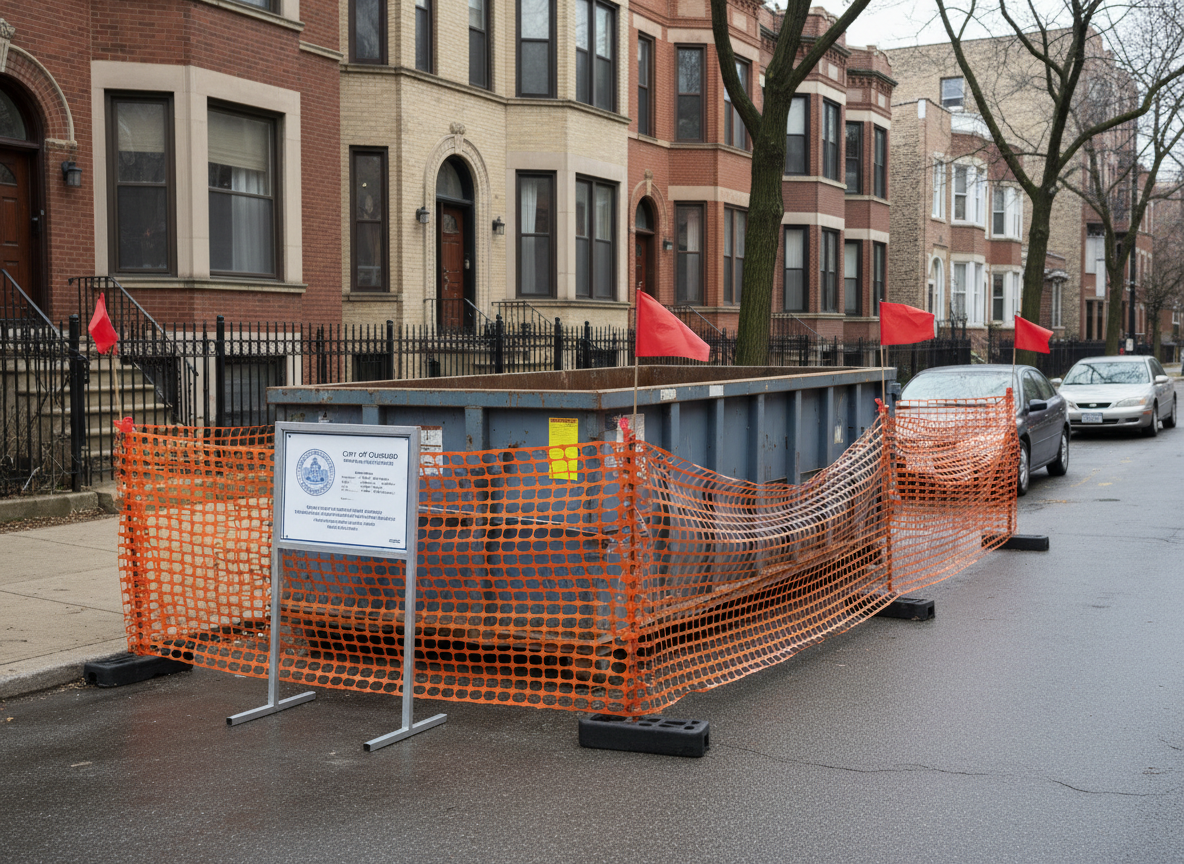
Chicago requires a street use permit from the local alderman before placing any temporary dumpster on public streets or alleys. Approval depends on the exact block in neighborhoods such as Lincoln Park, Wicker Park, Lakeview, or Hyde Park, where narrow streets and older row homes often limit options. The process accounts for Cook County regulations and nearby cities like Evanston and Oak Park that share similar oversight.
Obtaining a Street Use Permit
Contact the alderman's office for the ward where the dumpster will sit. Provide the address, dumpster size, and duration of placement. In dense areas like Logan Square or West Loop, offices often require a site sketch showing clearance from hydrants, driveways, and bus stops. Permits are reviewed against Chicago Department of Transportation guidelines that protect pedestrian and vehicle flow. Cold winters bring extra scrutiny because snow removal equipment needs clear access along the curb. Summer heat increases demand for permits near Grant Park and Millennium Park events, lengthening review times. Once approved, the permit must remain visible on the dumpster at all times.
Placement Restrictions by Neighborhood
Older housing stock in Bridgeport, Pilsen, and Rogers Park features tight alleys that force dumpsters onto the street more often than in newer subdivisions. Lincoln Park and Andersonville frequently restrict placements near Lincoln Park Zoo or busy commercial strips to maintain foot traffic. South Loop and Uptown blocks near Soldier Field and Navy Pier add event-related blackout dates. The Chicago Riverwalk corridor limits curb cuts to protect underground utilities. In each case, the permit specifies exact positioning so the dumpster does not block catch basins or snow plowing routes during the cold months.
Seasonal and Weather Impacts on Placement
Humid continental conditions mean winter freezes can shift soil and create uneven curb lines, requiring extra blocking under dumpster wheels. Heavy summer rains in areas like Hyde Park and the South Loop increase the risk of dumpsters settling into soft asphalt. Crews must check drainage before final placement to avoid flooding complaints. Cold snaps also affect permit timelines because city crews prioritize snow routes. Operators in Wicker Park and Logan Square routinely add reflective tape and cones during shorter daylight hours from November through February.
Common Permit Violations and How to Avoid Them
Placing a dumpster without the alderman stamp is the fastest way to receive a ticket. Another frequent issue occurs when dumpsters extend past the permitted curb length in narrow streets of Uptown or Bridgeport. Failing to maintain clearance for emergency vehicles near the Art Institute of Chicago or Willis Tower draws immediate removal orders. Checking the permit daily and moving the unit if street cleaning is scheduled prevents most problems. For larger projects, Construction Dumpster Rental teams coordinate directly with ward offices to keep paperwork aligned with actual site conditions.
Planning Your Project Timeline
Start the permit request at least one week before delivery, longer during peak construction months. Readers estimating container needs for Chicago homes can review Estimating Dumpster Size Needs For Typical Chicago Home Projects. Those handling debris across multiple zip codes benefit from Managing Construction Debris Disposal In Chicago Neighborhoods. Availability remains 24/7, allowing same-day adjustments when weather or city schedules change.