2026-09-10 · Tom Brennan
Estimating Dumpster Size Needs For Typical Chicago Home Projects
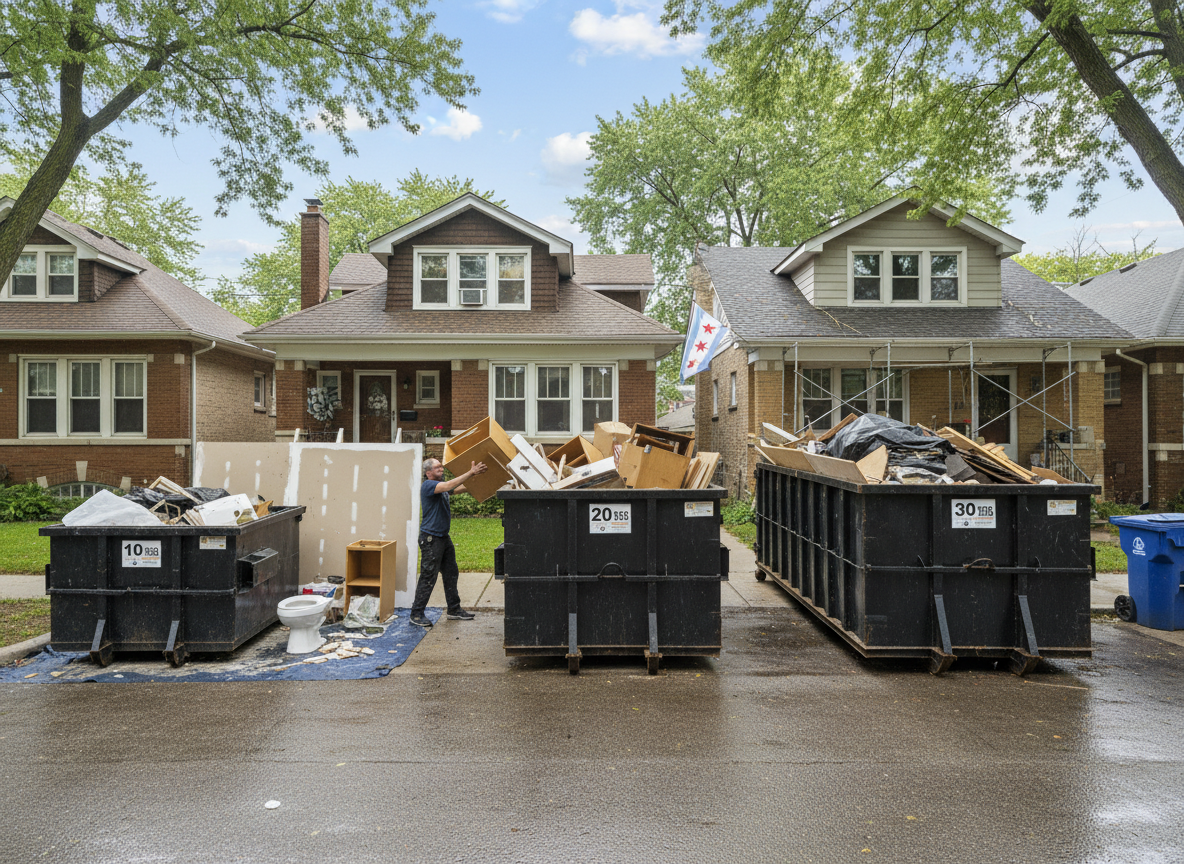
For typical Chicago home projects such as kitchen remodels or roof replacements, a 10- to 20-yard dumpster usually suffices for most residential jobs in areas like Lincoln Park or Wicker Park. Older bungalows and two-flats common across Cook County generate brick, plaster, and lumber waste that fills containers faster than newer builds. Cold winters slow exterior work while hot humid summers increase yard waste volume from landscaping tied to interior jobs.
Kitchen and Bath Remodels in Older Neighborhoods
Chicago kitchens in pre-1950 homes in Logan Square or Andersonville often involve removing cabinets, countertops, and flooring that total 4 to 8 cubic yards. A 15-yard unit handles the mix of wood, tile, and appliances without overflow when paired with a second load for heavy fixtures. Bathroom renovations in Lakeview or Uptown add similar volumes from vanities and drywall, plus plumbing scraps that require careful stacking to avoid exceeding weight limits on narrow streets. Homeowners in these dense blocks must measure door widths and alley access before ordering, since tight turns in Pilsen limit larger 30-yard options. Planning for one 10-yard container per major room keeps hauls efficient during multi-week projects.
Roofing and Exterior Projects Under Local Climate
Roof replacements on homes near the Chicago Riverwalk or Grant Park produce 8 to 12 yards of shingles and underlayment per 1,000 square feet, making a 20-yard dumpster the standard choice for single-family properties in Bridgeport. Humid continental summers accelerate material degradation, while winter freezes make tear-offs slower and more fragmented. Crews working near Soldier Field or Navy Pier often stage containers on driveways to avoid street restrictions, and they factor in extra space for ice buildup on loads. Nearby suburbs like Evanston and Oak Park share similar roof pitches and debris profiles, so the same sizing rules apply when crossing into those zones. Always calculate square footage first rather than guessing based on stories alone.
Basement and Garage Cleanouts in Dense Blocks
Full basement cleanouts in South Loop or West Loop two-flats commonly require 15- to 30-yard units because of accumulated furniture, concrete chunks, and metal from decades of use. A 20-yard container manages most single-family garage jobs in Rogers Park when debris includes bikes, tools, and shelving but stays under 2 tons. Winter scheduling in these neighborhoods means ordering early since frozen ground can delay truck access on unplowed alleys. Linking cleanouts to ongoing construction work lets crews combine loads and reduce trips across Hyde Park or Uptown streets. Accurate volume estimates prevent mid-job swaps that add fees.
Sizing Steps and Local Coordination
Measure project square footage and multiply by material depth to reach cubic yards, then round up 20 percent for Chicago's mixed debris types. Contact local haulers 24/7 to confirm availability around events at Millennium Park or Art Institute of Chicago that affect traffic. Review alley dimensions in West Loop before placement and check Chicago Street Permit Rules For Temporary Dumpster Placement for any block-specific rules. Pairing with Residential Dumpster Rental ensures units match typical home waste streams rather than commercial volumes. Cross-reference Cost Variables For Dumpster Rentals Across Chicago Zip Codes when budgeting for Lincoln Park versus Bridgeport jobs. Final loads should stay level and covered to comply with Cook County transport standards.